
Disclaimer
This blog expresses my personal observations and experiences. It does not target or criticize any individual, community, religion, or place. My intention is only to highlight the social mindset I have seen growing up in Odisha and to encourage a positive shift toward modern, profitable farming.
Introduction
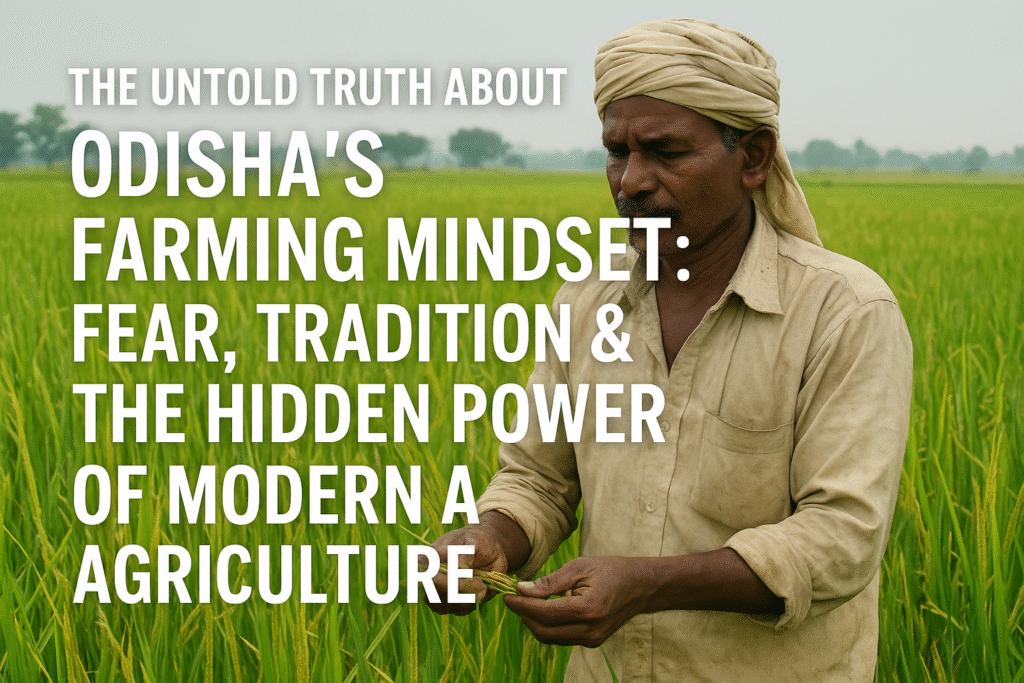
Odisha is blessed with fertile soil, rich natural resources, and a deep cultural connection to agriculture. For generations, farming has been the backbone of our rural economy. Yet behind this agricultural heritage lies a mindset shaped by fear, tradition, and past struggles.
Despite having enormous potential, many Odia families still view farming as a last option, not a career or business opportunity. In this blog, I explore the untold reasons behind this mindset—and how Odisha can unlock the hidden power of modern agriculture.
Why Odia Parents Prefer Jobs Over Farming
For decades, families across Odisha have encouraged children to focus on education with only one dream in mind:
Get a secure job, preferably a government job.
This mindset was built over generations and is driven by:
- The fear of cyclones destroying standing crops
- Memories of past crop failures and debt traps
- A belief that jobs provide dignity, stability, and social respect
- Lack of exposure to modern, profitable farming techniques
To most families, farming represents risk, while jobs represent security. This fear-driven mindset has shaped the ambitions of an entire generation.
The Misbelief That Farming Is “Poor Man’s Work”
One of the strongest social perceptions in Odisha is that farming is meant only for poor or uneducated people.
This thought is so deep-rooted that even educated youth begin to believe:
- “Smart people don’t do farming.”
- “Agriculture means struggle.”
- “Farming leads to poverty.”
I am not ashamed to admit that during my school days, I too believed the same.
But later in life, as I gained exposure to real farmers, modern agriculture technologies, and successful agripreneurs, my entire perspective shifted.
Farming is not manual labor—it is science, strategy, and entrepreneurship.
The Truth: Farming Isn’t the Problem—Our Over-Dependence on Paddy Is
In Odisha, farming often means only one crop: paddy.
This over-dependence has caused long-term challenges:
- High input costs for fertilizers and pesticides
- Labour shortages and high wages
- Minimal increase in market price
- Soil fertility loss due to repeated paddy cycles
- Increased vulnerability to rainfall and flood patterns
Paddy is culturally important, but paddy-only farming limits income and increases risk.
The real issue is not farming—it is the belief that “farming means paddy, and paddy means low profit.”
Odisha’s Untapped Potential: More Than 50 Profitable Crops
Odisha is a goldmine for diversified farming, but most of this potential remains unused.
High-Profit Crops Suitable for Odisha
- Banana
- Papaya
- Pineapple
- Groundnut
- Ginger
- Turmeric
- Chilli
- Capsicum
- Okra
- Onion
- Marigold, Jasmine, Tuberose
Modern Farming Opportunities
- Polyhouse & greenhouse cultivation
- Hydroponics & vertical farming
- Drip irrigation & precision agriculture
- High-density fruit orchards
Allied Sectors With Excellent Profit
- Mushroom farming
- Poultry
- Goat farming
- Dairy
- Beekeeping
- Fisheries & aquaculture
These require less land, less risk, and often give better returns than traditional paddy farming.
The Hidden Power of Modern Agriculture
Modern agriculture is no longer limited to cultivation.
A farmer who uses technology, markets his products smartly, and adopts diversified crops can earn far more than many salaried professionals.
But Odisha rarely celebrates its successful farmers. Their stories remain local, while job promotions and exam results go viral—shaping how the next generation thinks.
My Personal Mindset Shift
During childhood, I watched farming programs on TV, but still believed farming was not a respectable profession. I grew up thinking farmers struggled and educated people should avoid agriculture.
But over time, when I met modern farmers, visited successful farms, and understood how agriculture is evolving, my thinking transformed.
Farming is not backward—it is a powerful business opportunity for those who understand it.
The Rise of the New Odia Agripreneur
Thankfully, Odisha is changing. The new generation is exploring:
- Organic farming
- Mushroom cultivation
- Beekeeping
- Floriculture
- High-value fruit orchards
- Hydroponics
- Agritech solutions
- FPO leadership and startup models
Social media has brought farmer success stories to the spotlight. Young minds are proving that farming can be cool, profitable, and impactful.
What Odisha Needs to Change for a Stronger Agricultural Future
To unlock Odisha’s true agricultural potential, we must:
- Shift from paddy-only to diversified farming
- Provide training on modern technologies
- Celebrate farmer success stories as much as job achievements
- Introduce agriculture in schools as a real career option
- Encourage experimentation and innovation
- Promote branding, processing, and direct farm-to-market models
A mindset shift is the starting point for economic transformation.
Conclusion
Farming is not a poor man’s job. It is a profession of intelligence, innovation, and entrepreneurship. Odisha has fertile soil, favourable weather, and countless opportunities—but what we truly need is a change in mindset.
The real issue is not farming.
The real issue is believing that farming = paddy and paddy = low profit.
With diversification, modern technology, and a positive mindset, Odisha can unlock the hidden power of agriculture and build a prosperous future for its farmers.
These thoughts are shared only to inspire—not to criticize.
For More details follow me on social media: https://in.linkedin.com/in/nihar-ranjan-kar-128aa41b6